· Security · 3 min read
EPSSv4 Unveiled: Transforming Vulnerability Prioritization for Enterprise Security
An in-depth look at the EPSSv4 update, and key improvements
The Evolution of Vulnerability Prioritization
As security professionals, we’re constantly seeking more accurate ways to assess risk in our increasingly complex threat landscape. The recent release of EPSSv4 on March 17th, 2025 marks a significant evolution in vulnerability prioritization methodology.
A Brief History of EPSS
The Exploit Prediction Scoring System emerged from a recognition that traditional vulnerability scoring systems like CVSS, while valuable, didn’t adequately predict real-world exploitation. EPSS was first introduced in 2019 as a research project aimed at developing a data-driven model to predict the likelihood of vulnerability exploitation. The initial version showed promising results by analyzing historical exploitation data and vulnerability characteristics. In 2021, FIRST (Forum of Incident Response and Security Teams) formally adopted EPSS, leading to the release of EPSS v2 with improved modeling techniques and data sources. EPSS v3 followed with further refinements, establishing EPSS as a critical component in modern vulnerability management strategies. Now, with EPSS v4, we see the most substantial enhancement yet to this increasingly essential vulnerability prediction model.
Understanding EPSS Scoring Model
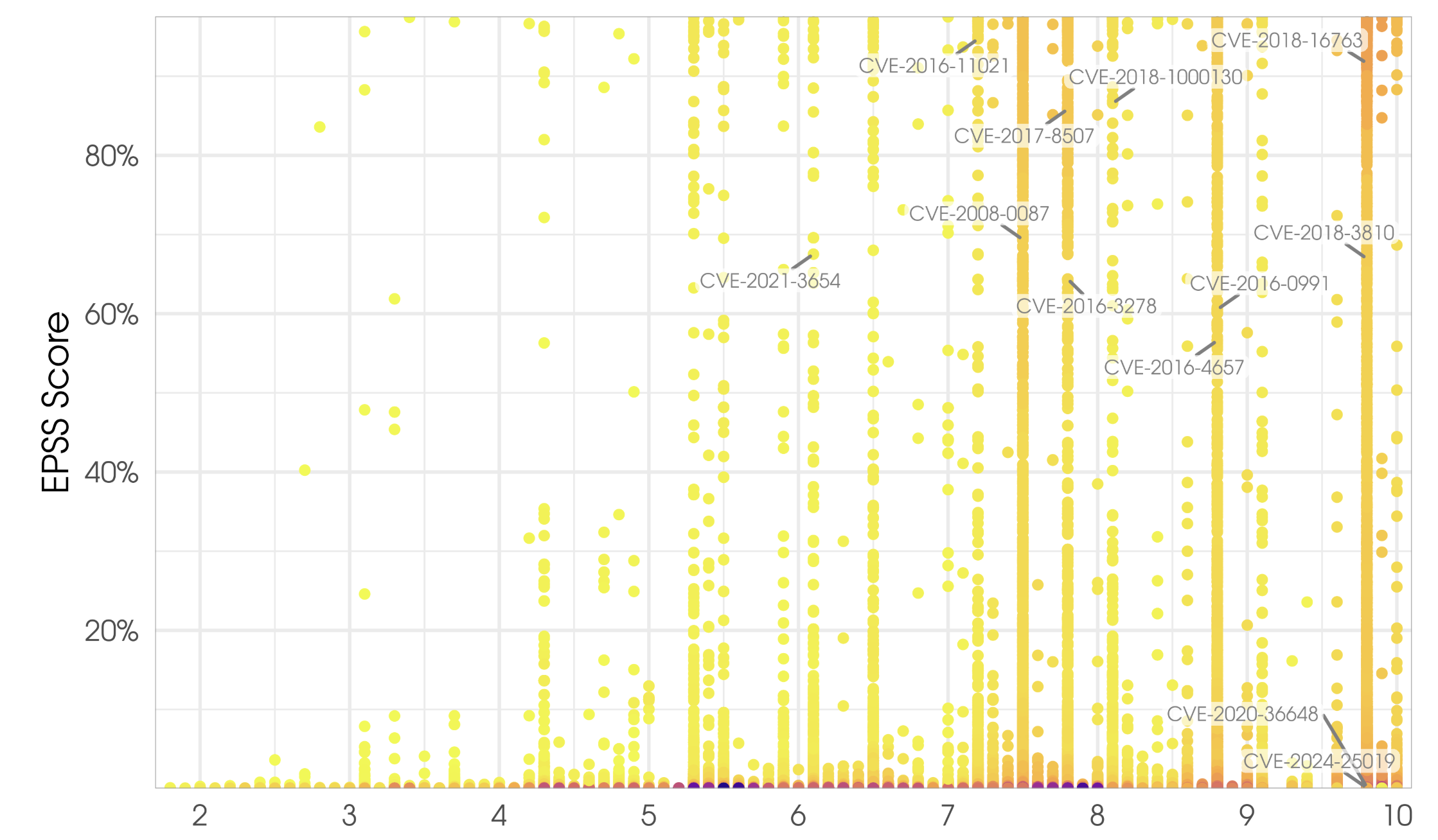
The Exploit Prediction Scoring Model provides a data-driven probability assessment (0-1) of exploitation likelihood for known vulnerabilities. Unlike CVSS, which focuses on technical severity, EPSS answers a critical operational question: “How likely is this vulnerability to be exploited in the next 30 days?”
This distinction is crucial for security teams drowning in vulnerability alerts. While CVSS remains valuable for understanding the technical severity characteristics of vulnerabilities, EPSS helps prioritize remediation efforts based on real-world exploitation patterns.
EPSSv4 Improvements
The transition from version 3 to 4 represents FIRST’s commitment to continuous improvement through data science.EPSSv4 introduces several pivotal enhancements:
Enhanced Data Integration
EPSSv4 now incorporates a substantially expanded threat intelligence dataset, drawing from additional commercial and open-source feeds. This broader data foundation significantly improves prediction accuracy, particularly for newly disclosed vulnerabilities where historical patterns may be limited.
Improved Statistical Modeling
The underlying algorithms have been recalibrated with advanced machine learning techniques that better account for temporal factors in exploitation patterns. This refinement allows the model to more accurately reflect how threat actor behaviors evolve over time.
Increased Scoring Precision
The updated model delivers more nuanced probability assessments, enabling security teams to make finer distinctions between vulnerabilities that previously might have received similar scores.
Practical Takeaways
The move to EPSSv4 means security teams can:
- Focus remediation efforts more precisely on vulnerabilities that pose genuine exploitation risk
- Reduce alert fatigue by deprioritizing vulnerabilities with low exploitation probability
- Make more defensible risk acceptance decisions when temporary vulnerability exceptions are necessary
- Better align security operations with business priorities through more accurate threat modeling
Conclusion
EPSSv4 represents a significant advancement in our ability to predict and prioritize vulnerability exploitation risk. By incorporating this refined model into your vulnerability management program, you can shift from reactive patching to proactive, intelligence-driven security operations.
For InfoSec professionals looking to optimize limited resources, EPSSv4 offers a compelling data point that can transform vulnerability management from an overwhelming challenge into a structured, manageable process that demonstrably reduces organizational risk.